Penthouse Leadership Academy: Cohort 2 Impact Report
22 September 2026 · Ayegbusi Temitope & Eniade Blessing
Penthouse is a leadership institution with a focus on raising leaders before the world needs them.
The Academy focuses on Nigerian youth, teenagers and organizations, while the Penthouse Leadership Institution, coming in 2027, will be an on-site expression for Africans looking to develop grassroots leadership skills across four major areas: politics, business, entertainment and religion.
A Brief look into Cohort 2
Cohort 2 was built around one simple idea: leaders need more than one area of development to become well-rounded.
The program covered fashion, nutrition, digital leadership, self-leadership and basic digital tools. Beyond the lectures, participants were given personal and group projects designed to help them sell their vision, work with a team, solve problems, handle criticism, think critically and improve their presentation skills.
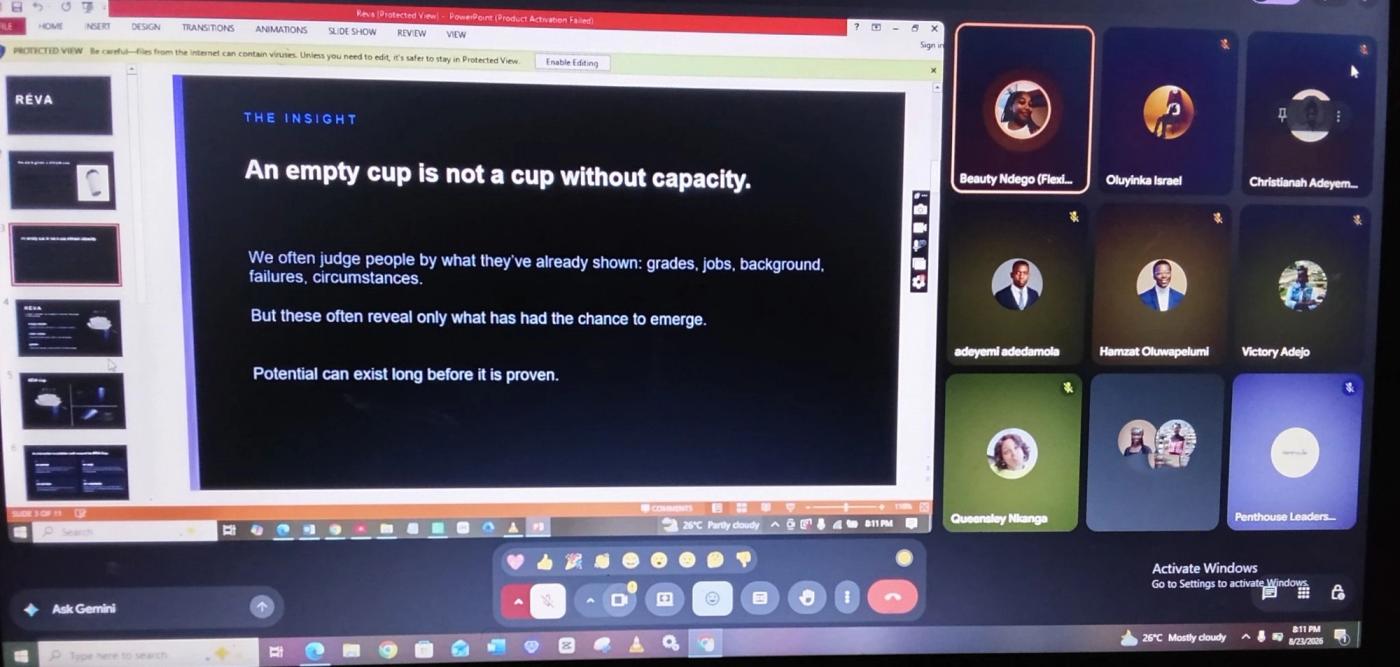
It was completely virtual for the convenience of the many.
What We Taught
The curriculum was intentionally broad because we believe the leader needs to be informed about every aspect of their lives; that is only when they can maximize impact and be relevant for a long time.
- The Nutrition sessions taught participants how to pay more attention to their health and understand what they consume. One participant said:
“I know why it is important for me to know how to read labels now, as these ingredients are essential to how long I will live.”
- The fashion sessions covered colour combinations, personal style, clothing representation and how to dress in a way that fits your personality and context.
- Self-leadership focuses on building a motivation system that makes it easier to finish what you start.
- Digital Leadership explored how leaders can use digital platforms and algorithms to build businesses and attract opportunities, while the Basic Digital Tools class introduced participants to AI tools and the Google and Microsoft Workspace environments.
Project 1: Build a Story and Sell a Story
The idea behind adopting a project style of learning to our curriculum is to ensure people are able to have practical expressions of the things they learn.
People are allowed to make decisions, see the consequences of their decisions, work with random people and achieve goals. According to data, projects have been one of the most exciting, challenging and instructive aspects of the entire curriculum.
For the first project, participants were divided into three teams through a ballot system. Three alumni team consultants were brought in to guide the teams without taking over.
We did not appoint team leaders for them.
Instead, participants had to nominate, volunteer or otherwise determine their own leadership structure. An internal team member stayed with each team to monitor progress, while the community manager followed up with participants and consultants.
The idea was simple: if we were going to call ourselves a leadership academy, participants needed opportunities to actually practise leadership.
The Challenge: A Coffee Cup
Brief: Build a product of your choice and sell us a story. Ensure the product is sellable and the story is compelling.

Every team received an ordinary coffee cup. They could not change the physical object, but they could turn it into anything through the story they created around it.
They had to create the product concept, build meaning around it, explain how they arrived at the idea, develop AI-generated visual references, create a presentation and persuade an audience to buy into their idea.
The results were close.
Team C — Reva: 84.0%; Team B — The Lid: 82.5%; Team A — Witness Cup: 81.5%
All three teams scored above 80%.
But the scores were only part of what happened.
Participants described the experience as eye-opening, anxiety-inducing and unexpectedly demanding. One participant called it “a cup of anxiety + hope.”
Another realized that having a useful product was one thing, but convincing people to see and value it was another.
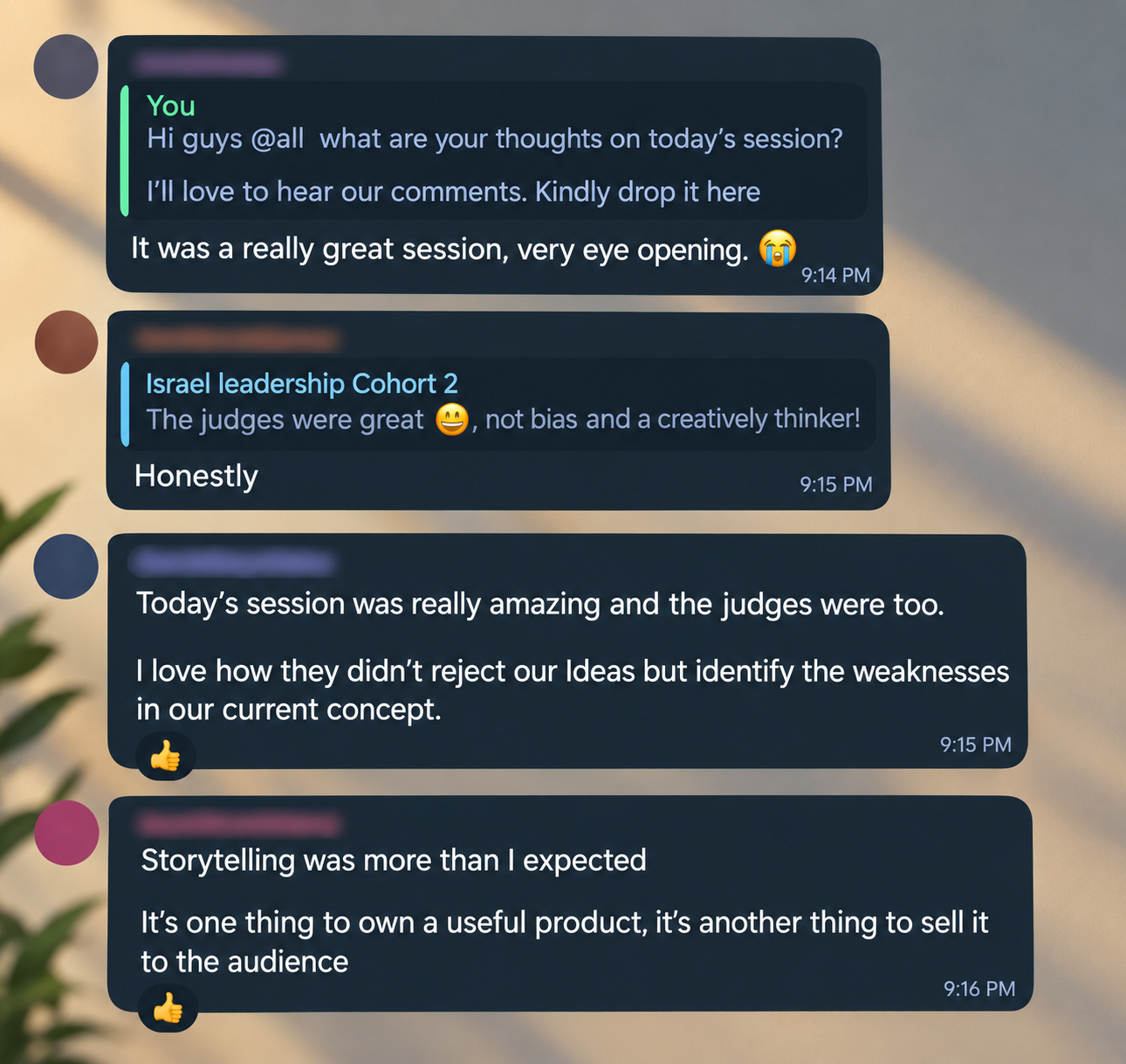
The projects were judged by Christianah Adebiyi, CEO of Artikina, and Hamzat Oluwapelumi, CEO of Zattt Studios and a storyteller.
Project 2: Research vs. Public Opinion
After the first project, the teams were dissolved and re-formed into two new teams. Participants now had to work with people outside the relationships they had already built.
The second project was a Research vs. Public Opinion leadership case study.
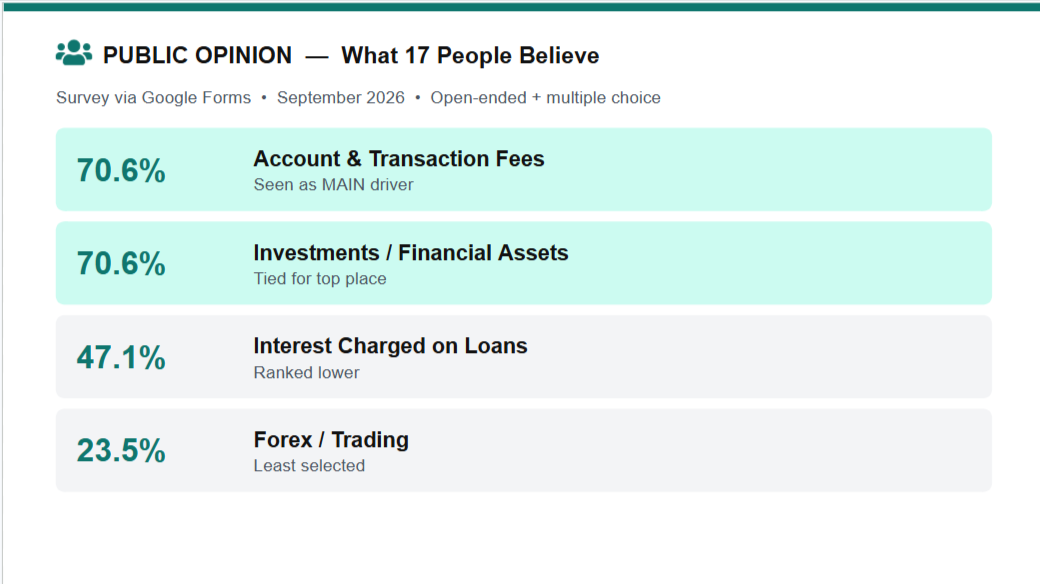
Participants investigated how major Nigerian banks generate profits using sources such as audited financial statements and filings. They then conducted a public survey to find out what everyday people believed about those profits.
The goal was to compare what people believed with what could actually be verified.
For participants with existing data-analysis experience, the project provided an opportunity to bring that skill into a team setting. For others, it became an introduction to research, evidence, survey work and financial terminology.
During the final presentations, participants had to defend what they had found.
One participant joked that numbers would never become a close friend.
Another said the presentation was so intense that they were “sweating in places” they did not know existed.
Yet the reflections that followed were not about avoiding the difficulty. They were about what the difficulty had produced.
The projects were judged by Micheal Ojo , Financial expert and Tax analyst, and Ebrusike Favour, Co-founder Zidwell.
Recognizing Outstanding Participants
On 23 September 2026, the Academy recognized three participants for their contributions throughout the program.
Best Graduating Student — Ndego Beauty Ishioma
Recognized for overall performance, participation, growth and contribution throughout the program.
Leadership Excellence Award — Felicia Okom Ijeh
Recognized for coordinating her team through changing schedules, competing demands, disappointments and operational challenges while keeping the work moving.
Leadership Commitment Honor — Queensley Nkanga
Recognized for consistency, sustained engagement and discipline throughout the cohort.
What Participants Have to Say
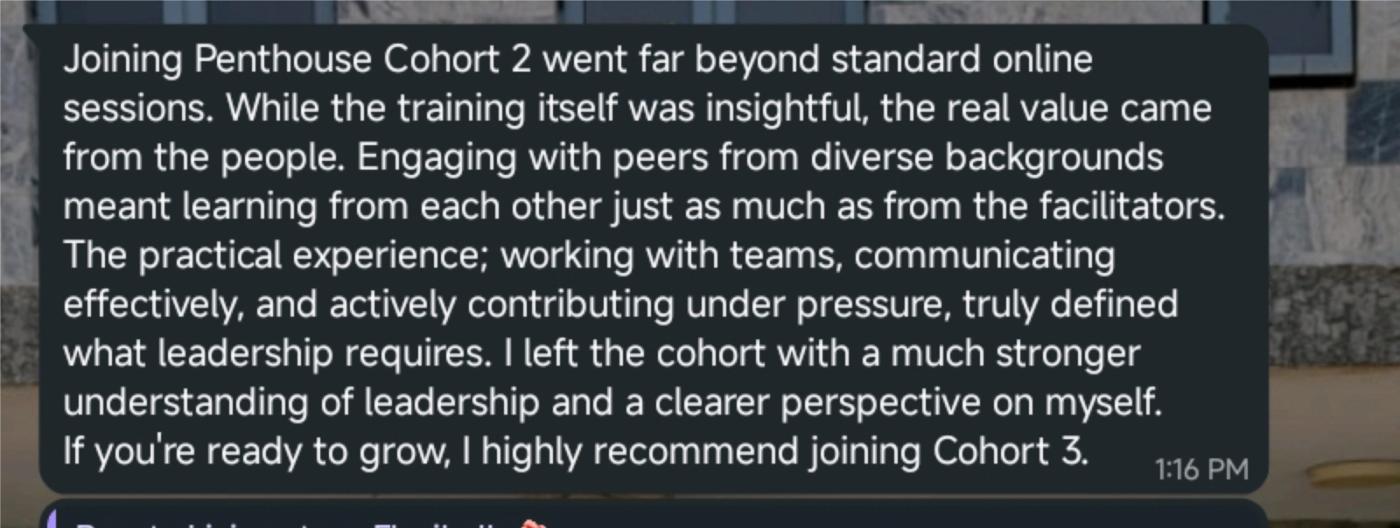
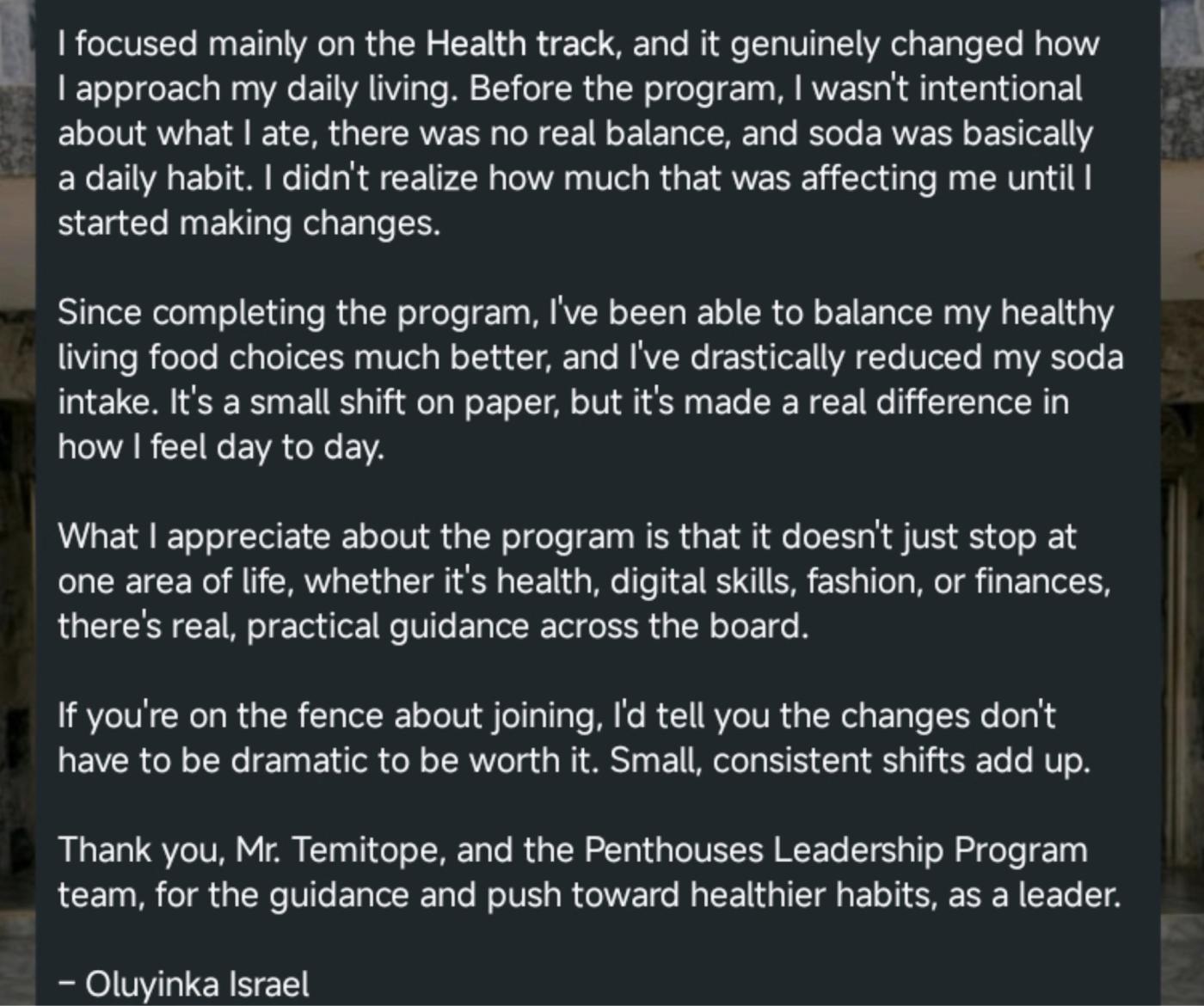
The participant testimonials should show what people actually took away from the experience, the things they learnt, the moments that challenged them and what changed in the way they approached leadership.
A Brief Into Our Lecturers
Cohort 2 brought together facilitators with experience across different areas of personal and professional development.

Ayegbusi Temitope — Founder and CEO of Penthouse Leadership Institution. Passionate about people, growth and the leadership ecosystem of Africa.
Treasure Jayeola — Fashion enthusiast passionate about colour, good dress representation and styling. En route to launching her first clothing collection for powerful women.
Ayomide Gideon — Digital marketer with over five years of experience, passionate about building projects, social influence and legacy. Founder of FuturePurpose and Oniwe.
Nifemi Bolarinde — Certified nutritionist and health enthusiast interested in healthy and intentional living. Founder of NoSoda360.
Tolulope Phillips — Fashion enthusiast and real estate manager with a goal of helping men dress with confidence in their fields of interest.
Blessing Eniade — Interested in personal growth and the productive use of time, and responsible for ensuring accurate transfer of digital tool knowledge to participants.
Supported by Sweeetboards
Cohort 2 was supported by Sweeetboards, a celebratory platform for different forms of celebration.
Their support contributed to making the cohort possible and reflects the role that sponsors and partners can play in supporting practical leadership development.
The Program Also Had to Learn
We also learned a few things that are quite essential for the next cohort.
- One major change from Cohort 1 was structure. Penthouse deliberately avoided allowing the Program to stretch unnecessarily long, recognising that prolonged timelines can reduce attention and momentum. Cohort 2 therefore moved more closely between lectures, activities and projects.
- Another change was the introduction of alumni team consultants. In Cohort 1, participants had to navigate their group work without this additional support. In Cohort 2, consultants provided direction while still allowing participants to make their own leadership decisions.
- The second cohort was also more structured and professional. Participant and facilitator feedback was positive.
- The Program also reinforced something important for us: leadership development cannot be measured only through a final presentation. It is also seen in the process, who steps forward, who follows through, who listens, who adapts, who keeps the team together and who continues contributing when things become difficult.
So, What Did Cohort 2 Actually Produce?
It produced projects. Presentations. Research. Public surveys. Team decisions. Leadership moments.
It produced participants who had to speak when they would rather have stayed quiet, lead when nobody else stepped forward, defend ideas when judges challenged them and adjust when their first plan stopped working.
It also produced something harder to put into a spreadsheet: participants beginning to see leadership as a practice that shapes how they work, communicate, research, collaborate, care for themselves, and present themselves.
That is the difference we want to keep building at Penthouse.
A class can tell you what leadership is. An academy can give you something to lead.
Cohort 3
Cohort 3 will continue with the same focus on practical learning, accountability, multidisciplinary development and opportunities to practice leadership rather than merely discuss it.
The Program fee remains ₦20,000.
Unlike Cohort 2, there will be no scholarships for Cohort 3 at this time, unless a sponsor comes on board to support them.
If you want to experience leadership beyond the classroom, Cohort 3 is the next opportunity to learn, practice and lead.